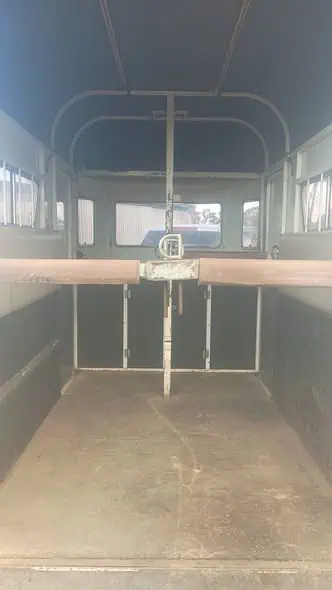
Most float owners wash down the obvious stuff after a trip — hose out the manure, maybe wipe the tailgate. But the real damage happens in the places you don’t see. Underneath rubber matting, inside wall cavities, around latches and hinges, and across aluminium panels, where ammonia silently eats away at the metal.
A proper detail isn’t about making your float look good on the driveway. It’s about protecting a serious investment and keeping your horses safe every time they load.
The Hidden Cost of a Dirty Float
Horse urine is highly corrosive. Left sitting under rubber mats, it attacks aluminium and steel floors from beneath — the one place you never inspect. By the time you notice soft spots or rust bubbling through, the structural damage is already done.
Floor replacements on horse floats can run anywhere from $2,000 to $8,000 depending on the build. A regular cleaning schedule that includes lifting mats and treating the floor surface underneath is a fraction of that cost.
Beyond the floor, neglected floats accumulate mould in padding, corrosion around rivets and hinges, and a buildup of bacteria that no amount of air freshener will fix.
Horse Health Risks You Might Not See
Respiratory issues are one of the most common health problems in transported horses, and a dirty float is a major contributor. Ammonia fumes from old urine, mould spores in confined spaces, and dust from degraded rubber matting all get trapped in the float’s airspace during transit.
Ammonia Exposure
Even low concentrations of ammonia irritate a horse’s airways. In an enclosed float on a warm day, levels can spike quickly — especially if mats haven’t been lifted and the floor beneath hasn’t been properly cleaned in weeks.
Bacterial and Fungal Growth
Warm, damp, organic-rich environments are breeding grounds. The areas behind breast bars, inside partition padding, and under feed mangers are particularly prone. Skin infections, thrush, and respiratory conditions can all trace back to a contaminated float environment.
What a Professional Float Detail Actually Covers
There’s a significant difference between a hose-down and a professional detail. A proper service works through the float systematically.
Exterior
High-pressure washing of all panels, wheel arches, chassis rails, and the undercarriage. Aluminium and painted surfaces are treated with appropriate cleaners — not generic degreasers that strip protective coatings.
Interior Floor
All rubber matting is removed, and the floor beneath is pressure washed, scrubbed, and treated. This is the single most important step and the one most owners skip. Cracks, joins, and drainage points are cleared and inspected.
Walls, Partitions, and Hardware
Interior walls are washed down and checked for mould or corrosion. Partitions, breast bars, and bum bars are cleaned and their padding inspected. Latches, hinges, and tie rings are lubricated and checked for function.
Windows and Ventilation
Louvre windows, vents, and any mesh screens are cleaned to ensure proper airflow. Blocked ventilation is one of the easiest problems to prevent and one of the most commonly overlooked.
How Often Should You Detail Your Float?
It depends on how frequently you travel, but as a general guide:
Heavy use (weekly travel or more)
A full professional detail every four to six weeks, with your own rinse-down after every trip.
Moderate use (a few times a month)
A professional detail every two to three months. Lift your own mats and hose the floor after each use.
Light or seasonal use
At minimum, a thorough professional detail before the start of your competition or travel season, and again before the float goes into storage. Floats that sit idle are just as prone to mould and corrosion as heavily used ones — sometimes more so.
Protecting Your Resale Value
A well-maintained float holds its value dramatically better than a neglected one. Buyers check floors first. If there’s any sign of corrosion, soft spots, or heavy staining under the mats, the value drops fast — regardless of how the outside looks.
Keeping a consistent cleaning history also gives you a genuine selling point. It signals to buyers that the float has been cared for properly, not just cosmetically tidied before listing.
The FLOATERS Approach
We built our service specifically around mobile horse float detailing because we know most float owners can’t easily tow to a fixed location for a wash. We come to your property, your agistment, or your spelling paddock and work through a full detail on-site.
Every service includes lifting and cleaning under mats, a full interior and exterior wash, and a post-detail inspection. We’ll flag anything that looks like it needs mechanical attention — because catching a rusted floor bolt early is a lot cheaper than finding out on the highway.t, then start writing!